
66 lines
1.5 KiB
Markdown
66 lines
1.5 KiB
Markdown
[](https://pypi.python.org/pypi/django-th/)
|
|
[](https://pypi.python.org/pypi/django-th/)
|
|
|
|
# Wallabag API
|
|
|
|
Python API for Wallabag v2.2.3
|
|
|
|
## Requirements
|
|
|
|
* aiohttp
|
|
|
|
## Installation
|
|
|
|
to get the project, from your virtualenv, do :
|
|
|
|
```python
|
|
git clone https://git.gasser.ovh/thib8956/wallabag-api-client
|
|
```
|
|
|
|
or
|
|
|
|
```python
|
|
pip install git+https://git.gasser.ovh/thib8956/wallabag-api-client.git
|
|
```
|
|
|
|
## Example usage
|
|
|
|
See the [examples/](examples) folder
|
|
|
|
1) request the token, if you don't have it yet
|
|
2) create the post
|
|
|
|
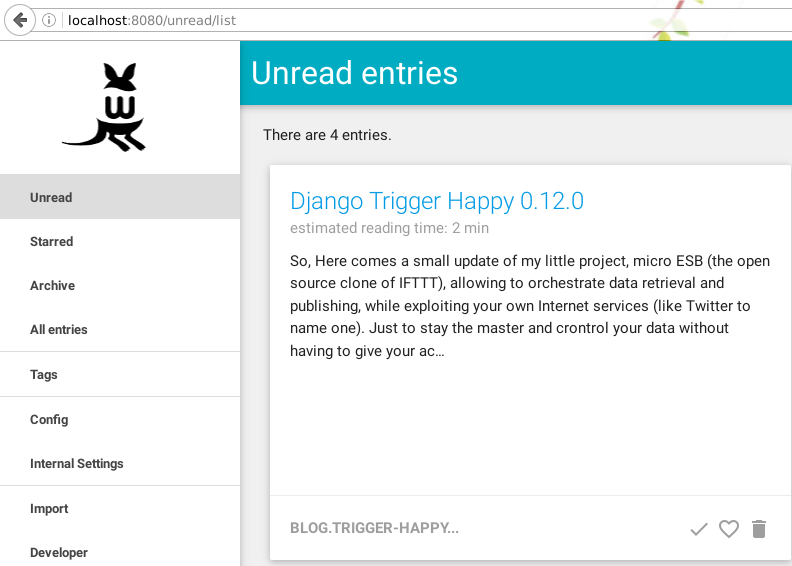
this will give you something like this :
|
|
|
|
|
|
|
|
|
|
## Testing
|
|
|
|
Install Wallabag V2 on your own host like explain here http://doc.wallabag.org/en/v2/user/installation.html
|
|
|
|
Then run the development version (with make run)
|
|
|
|
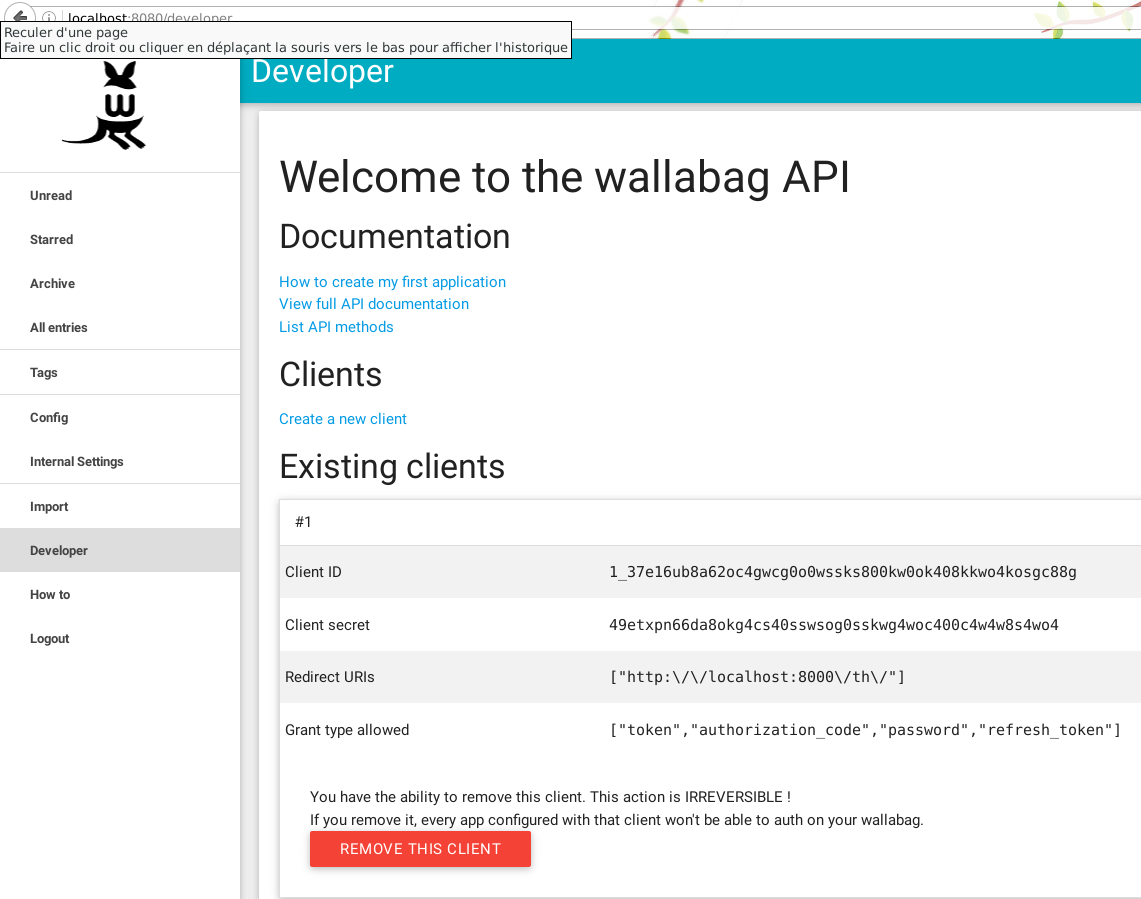
Then create a client API like explain here http://doc.wallabag.org/en/v2/developer/api.html
|
|
|
|
this will give you something like this
|
|
|
|
|
|
|
|
Then replace the client_id / client_secret / login / pass to wallabag_test.py and run
|
|
|
|
```python
|
|
python wallabag_test.py
|
|
```
|
|
|
|
### 4. Run tests
|
|
|
|
```bash
|
|
# Install dev dependencies
|
|
uv sync --extra dev
|
|
|
|
# Run tests
|
|
uv run pytest
|
|
```
|
|
|